Bolivia is a landlocked country in South America that shares borders with Chile, Peru, Brazil, Paraguay, and Argentina.
Bolivia has an estimated population of about 11.6 million people (July 2020 estimate), with more than 60% of the population under the age of 25.

Bolivia is a multilingual country. Spanish is the most widely spoken language, while Quechua, Aymara, and Guaraní are among its many official Indigenous languages.
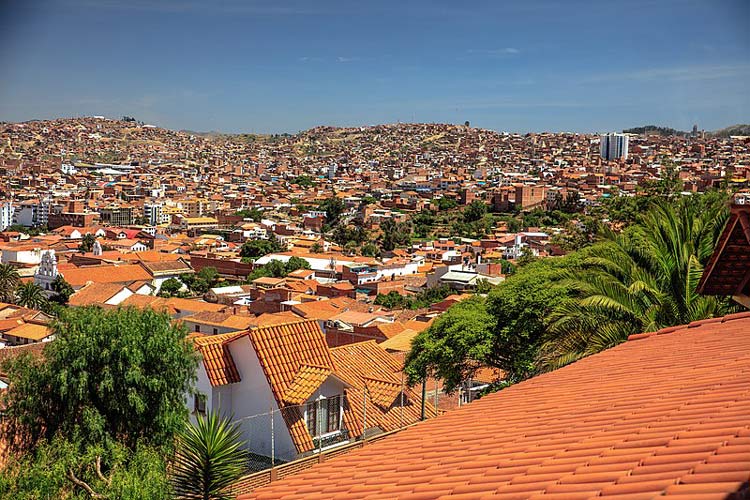
The country of Bolivia has two capitals.
La Paz serves as the administrative capital and the seat of the national government, while Sucre is the constitutional capital and home to Bolivia’s Supreme Court.
Known as the heart of Bolivia, Sucre is a UNESCO Historic City.
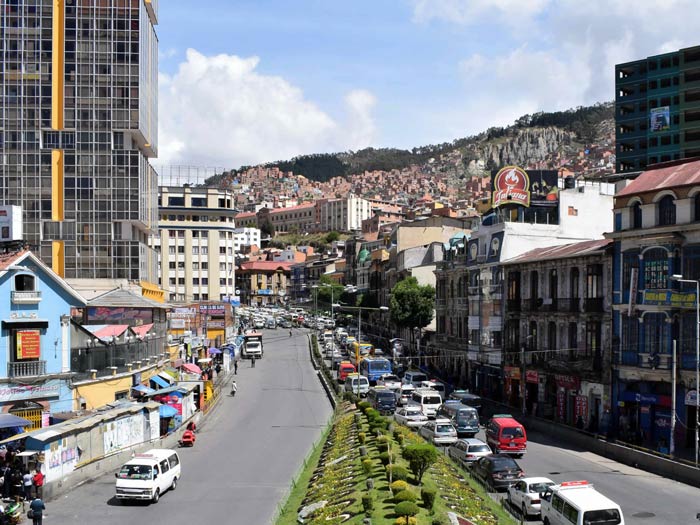
Originally named La Ciudad de Nuestra Señora de La Paz (“The City of Our Lady of Peace”), La Paz is famous for its dramatic landscape of towering mountains and deep valleys, where many residential neighborhoods are located.
Situated in the Andes Mountains, La Paz is the world’s highest administrative capital city, with elevations ranging from approximately 3,000 meters (10,000 feet) to more than 4,000 meters (13,000 feet) above sea level.
According to the country’s former voting laws, citizens could vote at 18 if married and 21 if single. Today, the voting age is 18 for all citizens.
Christianity is the predominant religion in Bolivia. A majority of Bolivians identify as Roman Catholic, while others belong to Protestant, Pentecostal, and other Christian denominations.
Although traditional gender roles have historically viewed men as the primary breadwinners, women today participate in many sectors of Bolivia’s workforce and economy.
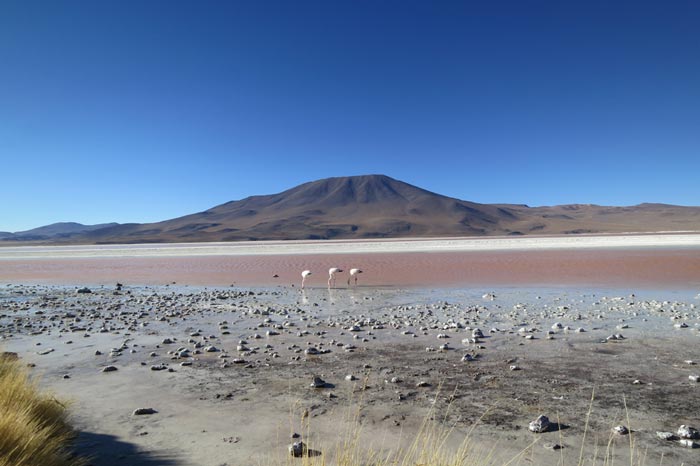
Bolivia has remarkably diverse landscapes that include:
- The peaks and valleys of the Andes Mountains, the world’s longest continental mountain range, stretching through Argentina, Bolivia, Chile, Colombia, Ecuador, Peru, and Venezuela.
- Parts of the Atacama Desert, one of the driest places on Earth.
- The Amazon Basin rainforest, one of the world’s most biodiverse ecosystems.

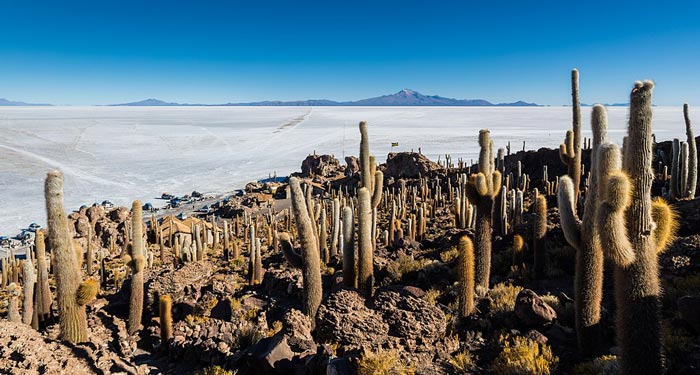
Bolivia is home to the Salar de Uyuni (Uyuni Salt Flats), the world’s largest salt flat.
Covering approximately 10,000 square kilometers (about 4,000 square miles), Salar de Uyuni attracts visitors from around the globe with its vast white salt crust, unique polygon-shaped formations, and spectacular mirror-like reflections during the rainy season.
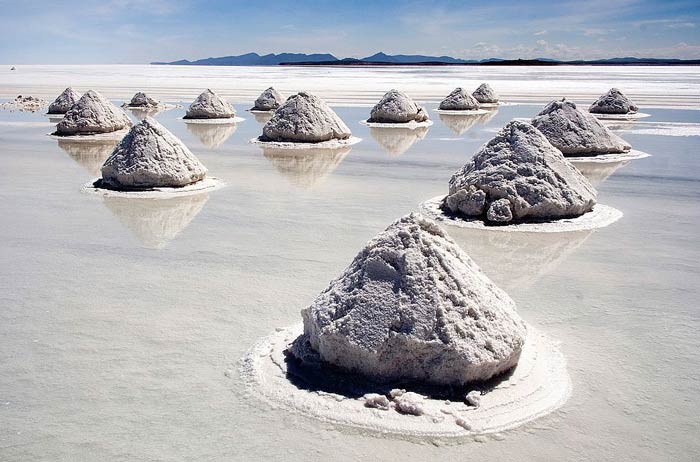
Photographer notes: The Salar de Uyuni is the world’s largest and highest salt flat… 25 times as large as the Bonneville Salt Flats [in Utah, USA]. It’s the remnant of a prehistoric lake surrounded by mountains without drainage outlets. Salt is harvested in the traditional method: the salt is scraped into small mounds for water evaporation and easier transportation, dried over fire, and finally enriched with iodine.
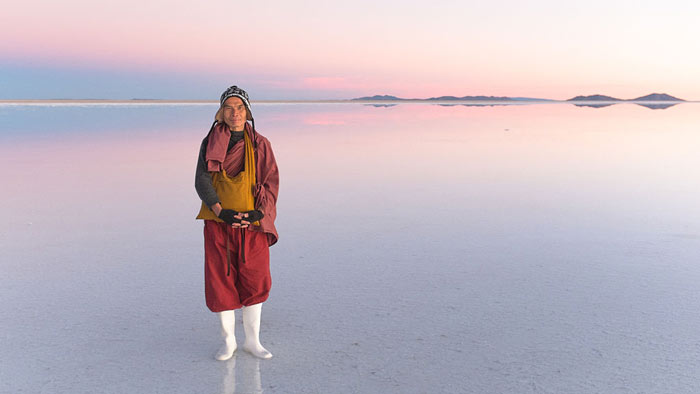
Photographer notes: Photo taken at sunset time. He was travelling for a few weeks in order to see some nice places and to meet some of his fellow monks scattered across Latin America. He was given a tablet computer to document his travels, which he seemed to have done pretty well.
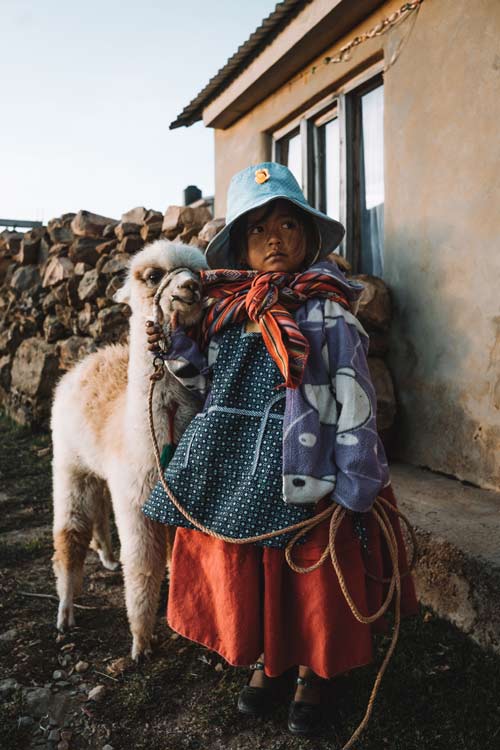
One of Bolivia’s most unusual landmarks is the clock on the country’s Legislative Assembly building in La Paz, which was modified to run counterclockwise. The change was intended to encourage Bolivians to appreciate their culture, and to embrace a fresh and original way of thinking.
Visitors to La Paz may also encounter people dressed as zebras. These costumed traffic educators help children and pedestrians cross streets safely, promoting road safety in a fun and engaging way.
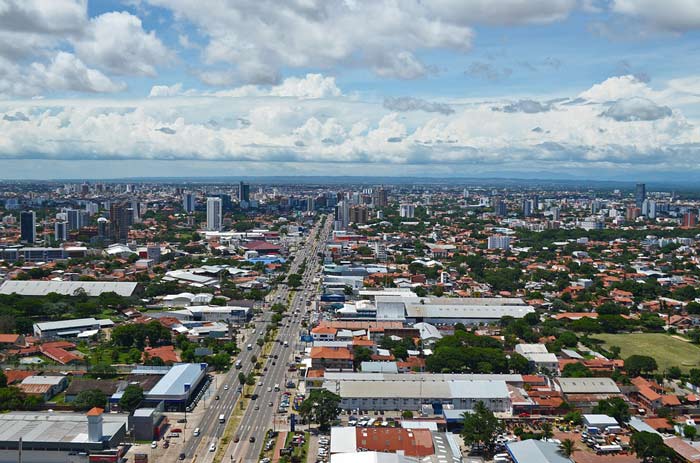
Santa Cruz de la Sierra is Bolivia’s largest city, followed by El Alto, Cochabamba, and La Paz.
From the towering Andes Mountains and the vast Uyuni Salt Flats to its lively cities and Indigenous traditions, Bolivia offers a fascinating blend of natural beauty and cultural significance. Would you visit Bolivia?