Most visitors arrive in Musanze because it sits at the foothills of Volcanoes National Park, home to the world’s famous Mountain Gorillas. The renowned park also serves as an entry point to unforgettable gorilla trekking experiences through the Virunga Massif forests—an African wildlife adventure sought and cherished by travelers from around the world.
However, there is much more to Musanze.
Musanze is Rwanda’s second-largest city after the capital, Kigali, and is about a two-and-a-half-hour drive from the capital. Known as the “food basket of Rwanda,” the region benefits from rich volcanic soils that create ideal conditions for agriculture. Crops flourish here, contributing to the area’s reputation as one of Rwanda’s important agricultural regions.
Beyond its fertile landscapes, with its morning mists lingering over rolling hillsides, in Musanze, nature, wildlife and culture blend to create a beautiful story. For centuries, the communities of Musanze have preserved their land and maintained their traditions, hospitality and a spirit of resilience.
Landscape of the Food Basket
The geography of Musanze is extraordinary. Five majestic volcanoes—Karisimbi, Bisoke, Muhabura, Gahinga and Sabyinyo—define the landscape, rising dramatically above rolling farmlands, their slopes feeding streams that sustain communities across the district. The volcanic soil is among the richest in Rwanda, producing Irish potatoes, beans, maize and a variety of vegetables in abundance.
Farming in Musanze is an occupation for much of the population, and is also part of the people’s identity. Nature leads the way here—the seasons are marked by natural rhythms of planting and harvest; and daily life, celebrations and community gatherings all follow nature’s tune.
One of the clearest expressions of Musanze’s connection to its land is Umuganura, which is Rwanda’s National Harvest Day. Umuganura takes place every August to mark the harvesting season. It celebrates gratitude for what the land has provided and reminds us that prosperity only has meaning when it is shared. That same friendly spirit is present throughout the year, seen in the warm greetings between neighbours, heartfelt conversations among friends and even strangers, and invitations to share tea or locally grown coffee together. Although coffee is cultivated across Rwanda, it is not typically served in homes or at family gatherings; visitors are more likely to enjoy Rwanda’s renowned coffee in coffee shops.
Culture and Heritage
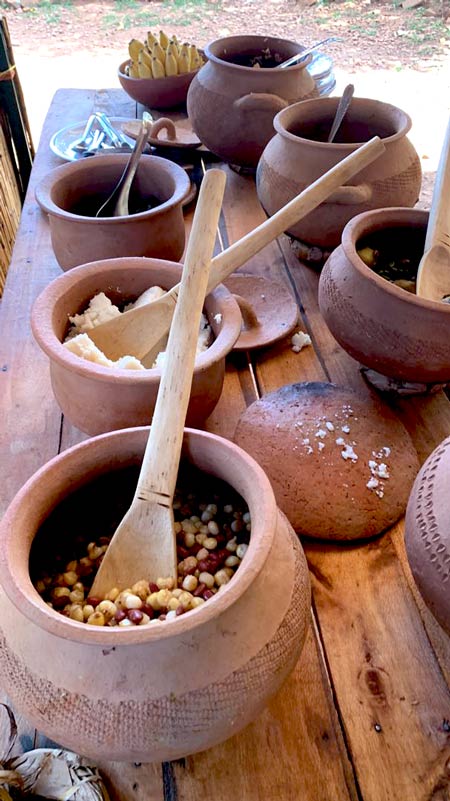
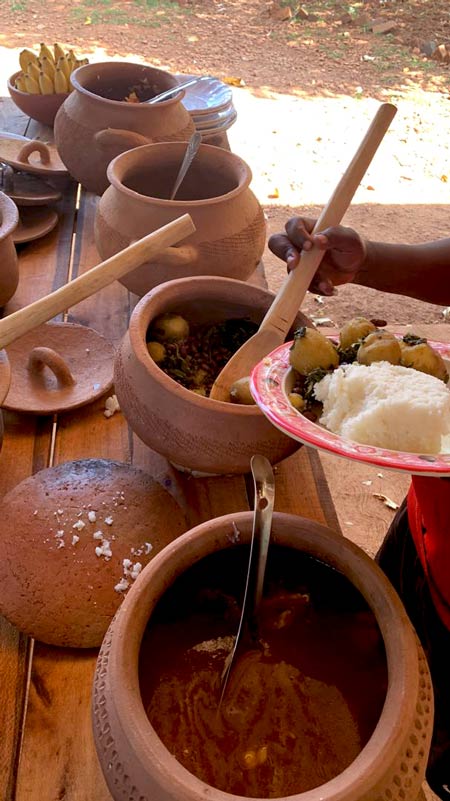
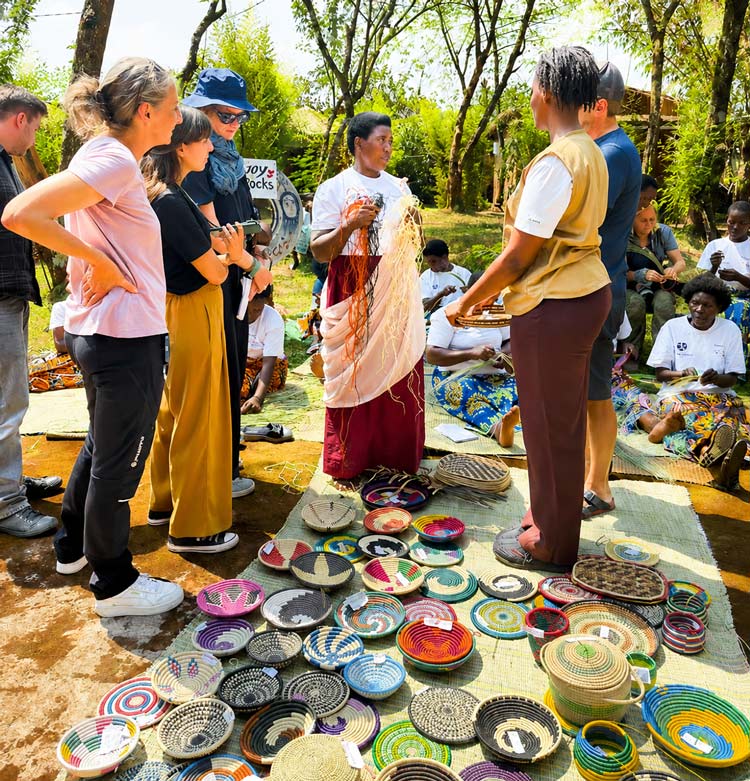
Common experiences of visitors to Musanze include a welcoming invitation into a home or a community kitchen where traditional meals are prepared and shared, or walks through the village which may lead to a family garden where medicinal plants are explained. You might spend an afternoon with women weaving baskets while they explain the stories behind the patterns they learned from their mothers and grandmothers.
The sharing of knowledge and stories is a part of the culture in Msanze. Elders tell stories about the volcanoes that never appear in guidebooks. The people are naturally generous with their time and are genuinely proud of their culture.
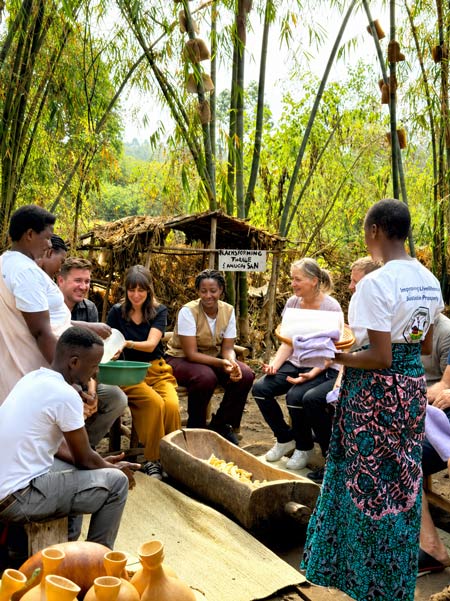
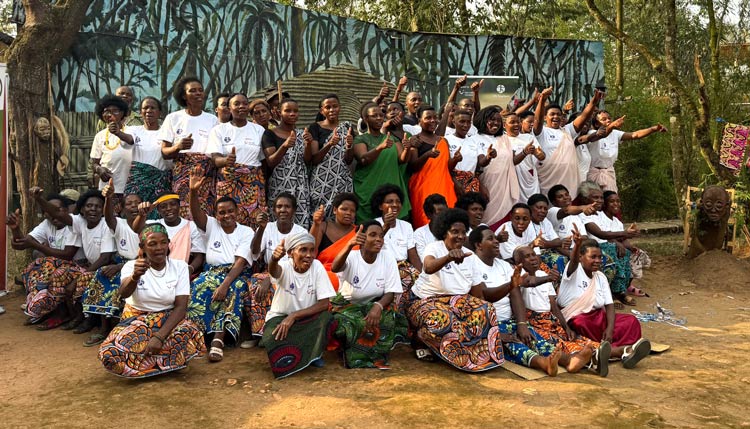
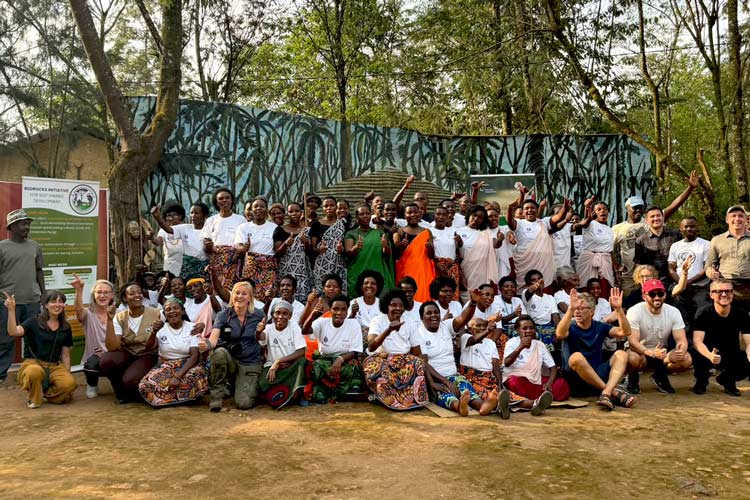
Living beside one of Africa’s most important national parks has come with some challenges. As conservation efforts and tourism have grown, communities in Musanze have adapted – learning how to increasingly balance farming, wildlife protection and everyday life. Many have become active partners in conservation – embracing the belief that healthy environments and thriving communities depend on one another.
I founded Red Rocks Rwanda in 2007 with the goal of connecting tourism with community life, based on the belief that tourism should not exist separately from community life. It should create opportunities for the people who call a destination home. That means cultural walks led by local guides, supporting women’s cooperatives that produce traditional crafts, and creating opportunities for young people through environmental education.
We have also developed community-based tourism where visitors become participants rather than spectators only. How do we achieve this? We encourage guests to cook a local meal with families, plant a tree alongside a farmer, sit around an evening fire listening to stories and music, or simply share roasted maize after a day’s work in the fields.
These simple experiences create opportunities for meaningful cultural exchange and allow visitors to experience Musanze through the eyes of the people who live here.
WATCH BANANA BEER EXPERIENCE MUSANZE
As Rwanda continues building its reputation for sustainable, community-centered tourism, Musanze offers the authentic. The culture remains alive because people live it every day. The landscape remains beautiful because local communities continue to care for it. And its hospitality feels genuine because welcoming others has always been part of life in Musanze.
Greg Bakunzi
REDROCKSRWANDA.COM
FB: Facebook.com/redrocksinitiative
IG: Instagram.com/redrocks.rwanda