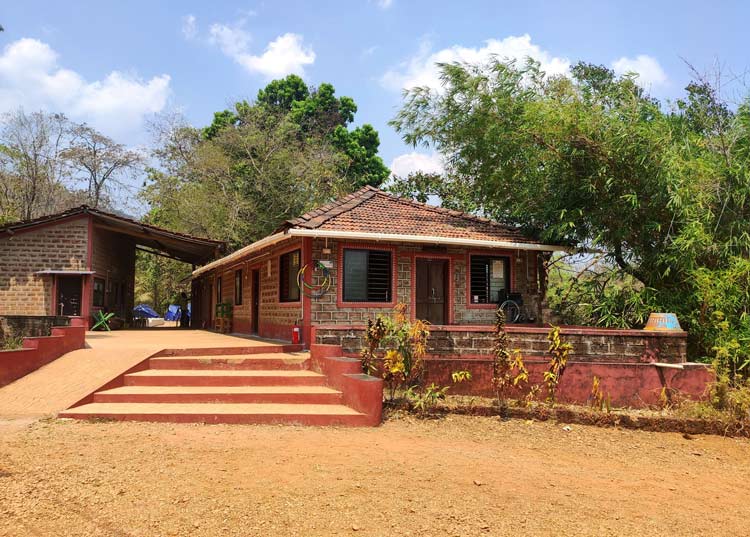
There was a time when the family home was the centre of a person’s life.
You were born there, grew up there, returned there after school and eventually built your own household nearby. The house was not simply a building. It was an anchor.
That idea is becoming harder to sustain.
For millions of people, home is becoming temporary.
A student leaves for university. A young professional moves to another city. A worker migrates overseas. A couple relocates because of employment. Parents remain in the old family house while their children build lives elsewhere.
The family home survives.
But fewer family members permanently live in it.
This creates a subtle transformation in what “home” means.
The family home increasingly becomes a place people return to rather than a place where they remain.
It becomes a destination for festivals, holidays, emergencies, weddings and reunions.
The house may be empty for much of the year and suddenly become crowded during a major celebration.
This is particularly visible in societies with high levels of internal and international migration.
A house in a village may contain the memories of an entire family while only one elderly parent continues to live there. Children may visit occasionally, maintain the property financially and eventually inherit it, but their everyday lives exist somewhere else.
The physical centre of the family and the practical centre of people’s lives are separating. That separation has consequences.
Property becomes emotionally valuable but economically complicated.
An inherited family house may be deeply meaningful while being located far from the jobs, schools and services that younger generations need.
Selling it may make financial sense. Keeping it may make emotional sense.
Families increasingly have to negotiate between the economics of property and the psychology of belonging.
This is not simply a real-estate problem. It is a family problem.
For generations, property provided continuity between generations. The family house was passed from parents to children and remained within the family.
But geographical mobility breaks that continuity.
The child who inherits the house may live 1,500 kilometres away. Their own children may have grown up in another country.
The emotional connection remains, but the practical connection weakens. Eventually someone asks the uncomfortable question.
What do we do with the house?
This question will become increasingly common.
It will affect millions of families as older generations age and younger generations become more mobile.
The answer may sometimes be to sell. Sometimes it may be to rent.
Sometimes it may become a holiday home.
Sometimes it may simply remain locked for years because nobody wants to make the decision.
The family house can therefore become a kind of frozen asset.
It contains financial value, cultural memory and emotional meaning at the same time. Those three forms of value do not always agree.
The transformation also changes childhood.
Children increasingly grow up between multiple homes.
There may be the parents’ apartment in one city, grandparents’ house in another, a rented accommodation near school and perhaps another country where relatives live.
Home becomes less singular.
A child may have several places where they feel they belong.
This could eventually change the psychological meaning of family identity.
Earlier generations often associated family with a particular village, neighbourhood or ancestral house.
Younger generations may associate family with people rather than geography. Their identity travels with them.
This is especially significant for diaspora families.
A person born in Dubai may have parents from Kerala, grandparents in another district and relatives spread across several countries.
Which place is home?
There may be no simple answer. The family becomes portable.
Technology reinforces this portability.
Family photographs live in clouds rather than albums. Important documents can be stored digitally.
Video calls connect relatives across time zones.
Family groups preserve conversations even when people are physically separated.
A person can carry an enormous amount of family history without carrying a physical object. This may make the family home less necessary as the primary container of memory.
But there is something technology cannot reproduce easily. Physical memory.
The smell of a particular room.
The staircase where someone grew up. The tree outside the house.
The kitchen where grandparents cooked.
The neighbourhood where childhood friendships began. These things matter precisely because they are physical.
That is why the family home may survive even when it stops being economically efficient. It can become an archive of belonging.
The danger is that societies may underestimate the importance of such places. Urban development tends to measure property by market value.
But family houses often contain another kind of value that does not appear on a balance sheet.
They provide continuity.
They give dispersed families somewhere to return.
They create a physical reference point for people whose lives are otherwise geographically fragmented.
At the same time, nostalgia cannot solve every problem. An old house may require expensive maintenance.
A remote property may be difficult to manage. Several heirs may disagree about its future.
A house can become a source of conflict precisely because it carries so much emotional significance.
The next generation will therefore have to develop new ways of managing inherited homes. Some may convert them into shared family spaces.
Some may become community spaces. Some may become rental properties.
Some may disappear entirely. There is no single correct answer.
What matters is recognizing that the family home is changing along with the family itself.
The nuclear family assumed that home, marriage, employment and family life could exist in one relatively stable location.
The mobile family breaks that model. Employment moves.
Children move. Parents age.
Relationships continue across borders.
The family home remains, but it becomes one node in a much larger network. Perhaps that is why visiting the old family home can feel strangely emotional. You are not simply returning to a building.
You are returning to a physical version of a family that no longer exists in quite the same form.
The house has remained still. Everyone else has moved.
That may become one of the defining images of the future family.
An old house standing in one place while its family spreads across cities and continents. Home will no longer necessarily be where the family lives.
It may be where the family remembers that it belongs together.
—
Kiran Pillai is an independent researcher and founder of Vastuta, focusing on technology, society, governance and social transformation.