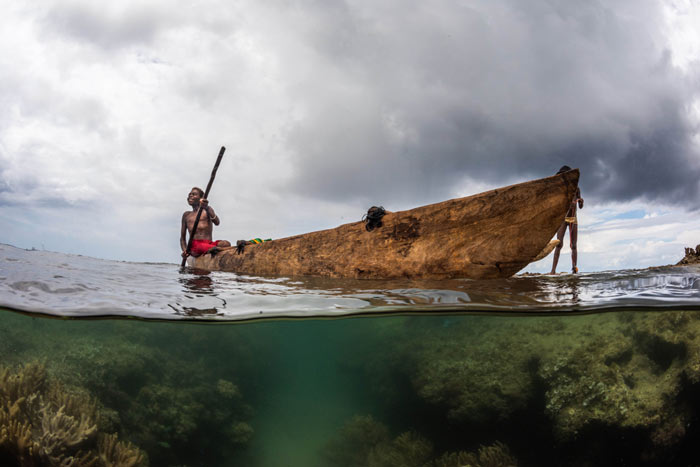
Mangroves are trees and shrubs that grow in salty or brackish coastal waters. Most of the world’s mangroves are found along tropical and subtropical coastlines.
Mangrove forests are found across several regions of the world. Asia has the greatest concentration, particularly in Indonesia, Malaysia, and the Philippines. Bangladesh and India are also home to extensive mangrove forests, including the Sundarbans, the world’s largest mangrove forest. Indonesia has one of the largest expanses of mangrove forests in the world.
In South America, mangroves are found primarily along Brazil’s northern and northeastern coasts. They also extend through Mexico and Central America.
In Africa, extensive mangrove forests can be found along the coast of West Africa, particularly in Nigeria and neighboring countries. Mangroves are also found in Northern Australia, as well as Southern Florida and parts of the Gulf Coast of North America.
Mangroves are vital ecosystems that provide important habitats, nursery grounds and sanctuaries for marine animals, birds, reptiles, and other wildlife. They also protect coastlines, support local communities, and play an important role in maintaining healthy coastal environments.
The following collection of photographs from The Ocean Agency, tells the story of mangroves—the species that depend on them, the ecosystems they sustain, and the many ways humans interact with and rely upon this remarkable environment.
The Interconnected World of Mangroves
“Honey Heist”
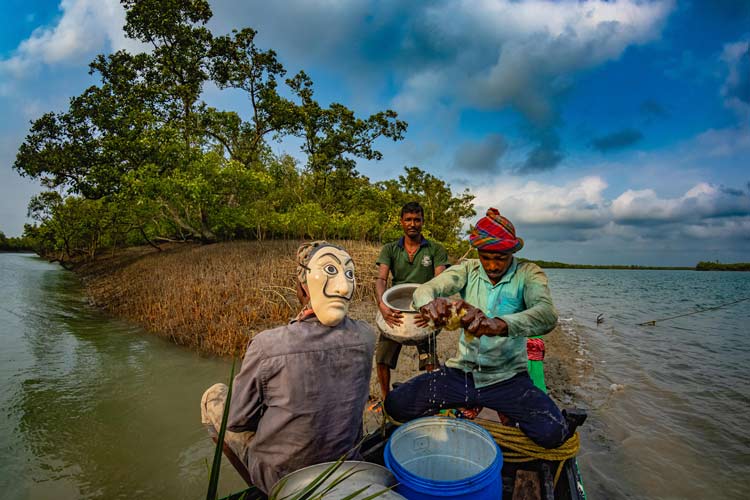
—
Mangrove Photography Awards Winner – Birds’ eye view of the hunt
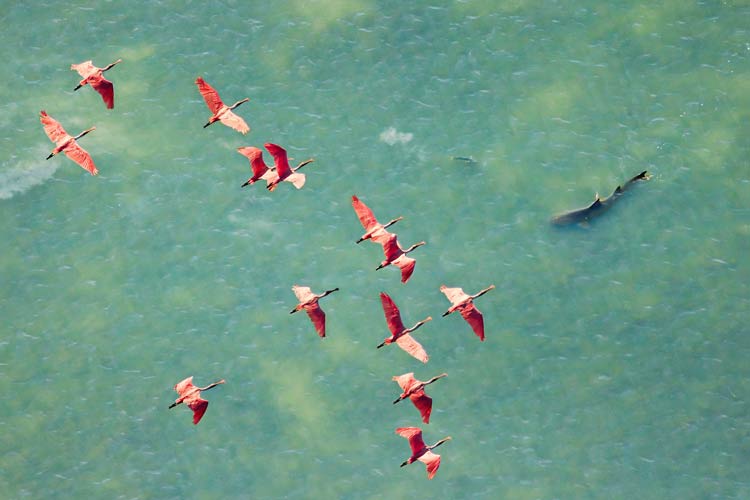
At first glance, this scene of Roseate Spoonbills gliding over a lemon shark in Florida Bay may look natural. But this actually documents what could be the last of the Everglades’ iconic birds who are being forced further north due to rising sea levels.
“Historically, Florida Bay was the primary nesting region of the Roseate Spoonbill in the US, but this species is becoming increasingly rare there as sea level rise negatively impacts their important mangrove foraging habitat… Spoonbills are tactile foragers, meaning they feed by touch. However, for this foraging method to be successful, the birds need relatively shallow water with very high densities of fish. This becomes particularly critical during the energetic bottleneck of the nesting season.” – The photographer
—
Mangrove Photography Awards – “Make living on mangroves”
—
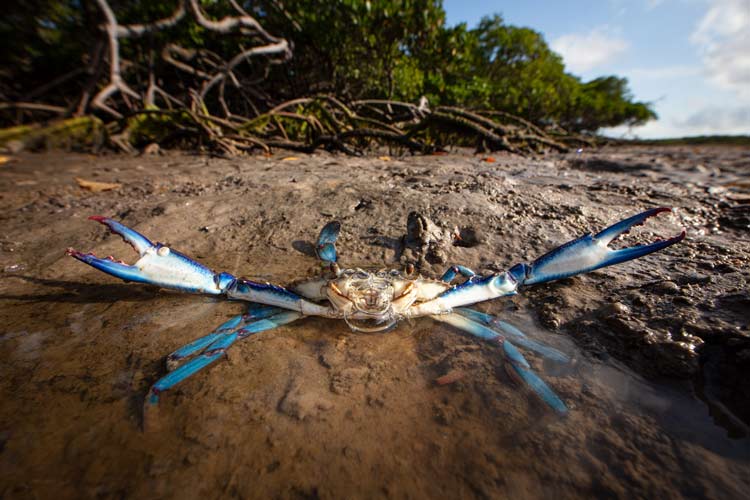
Blue crab in the mangroves
—
Pink mangrove lagoon
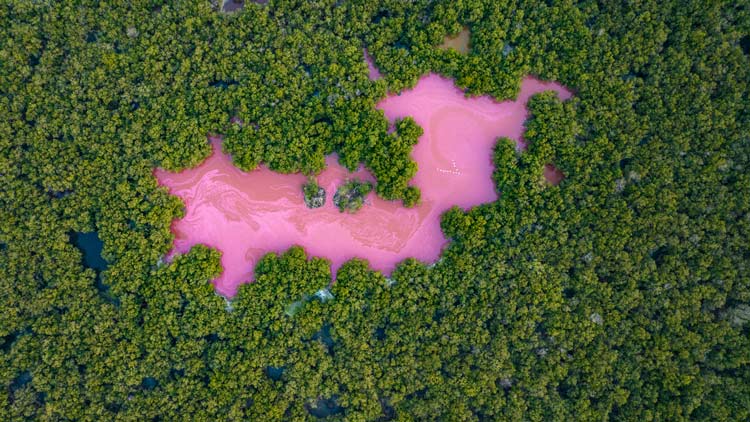
“In the least expected area of a mangrove in the Caribbean coast of Colombia, near Cartagena, a pink lagoon forms seasonally, given unique conditions of water ph, temperature, bird presence and light – a magical and unexpected sight.” – The photographer
—
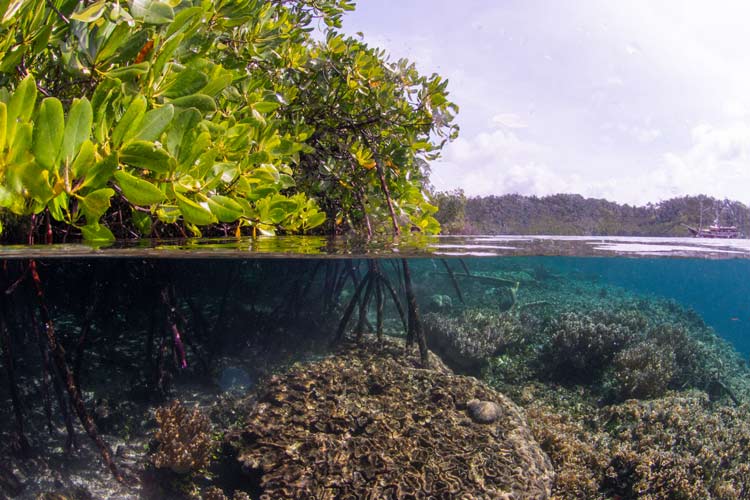
Mangroves in Raja Ampat, Indonesia
—
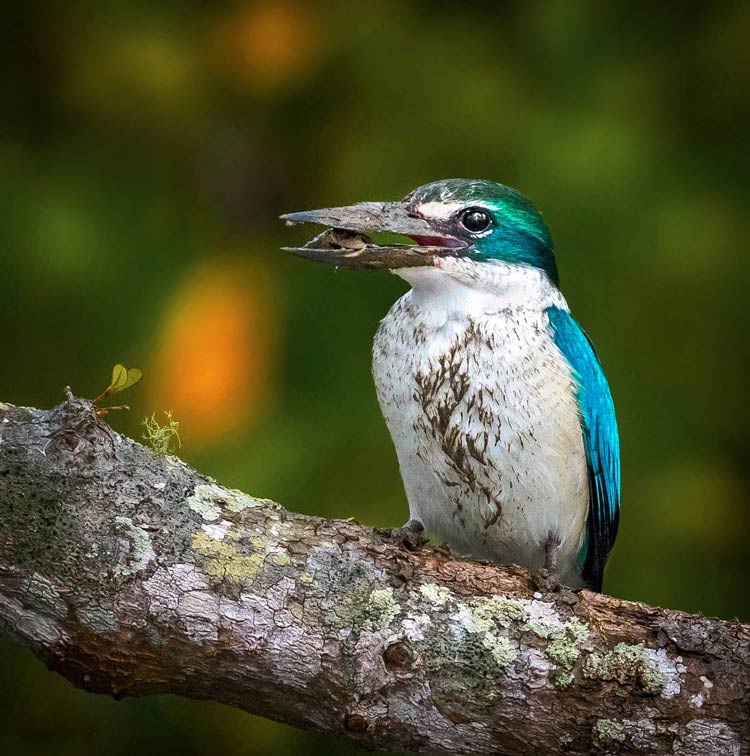
Mangrove Kingfisher, Sundarbans, India
—
“Jungle Cat”
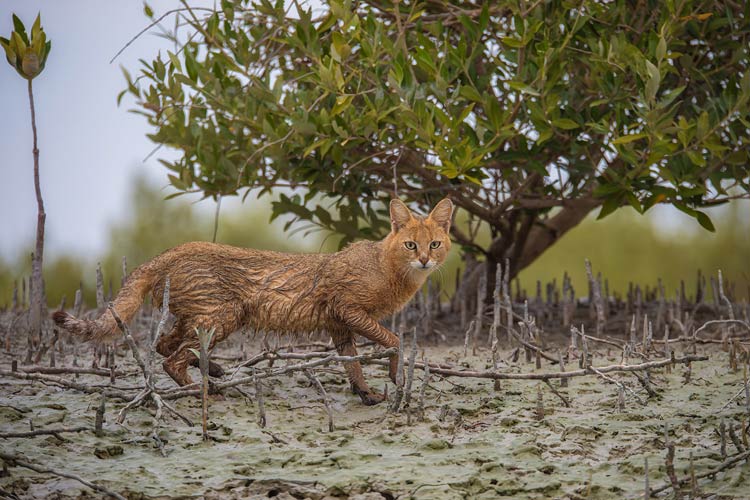
A forest cat after hunting in the mangrove forest of Bandar Abbas, Iran. The jungle cat, also called reed cat or swamp cat, is an endangered species in Iran. The solitary species are expert nocturnal predators with a taste for rodents, fish and small birds.
—
Mangrove Photography Awards Winner – Bhoben Biseash and his Otters
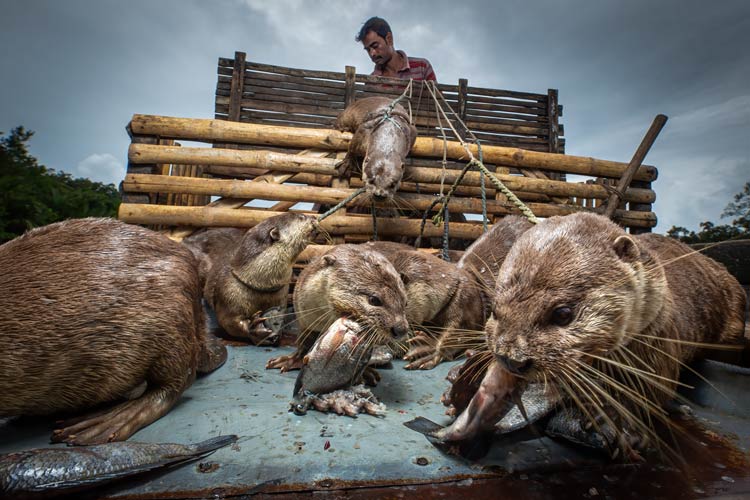
There are only a handful of otter fisherman left and their unusual method of fishing has been handed down from father to son for centuries. The trainer adult otters are teathered and the younger otters swim free. The otters chase fish from the muddy banks into the awaiting nets and after each fishing session get their share of the catch.
—
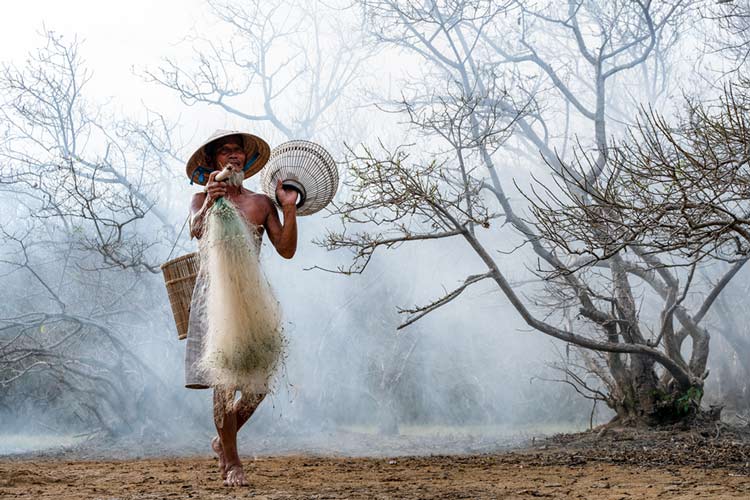
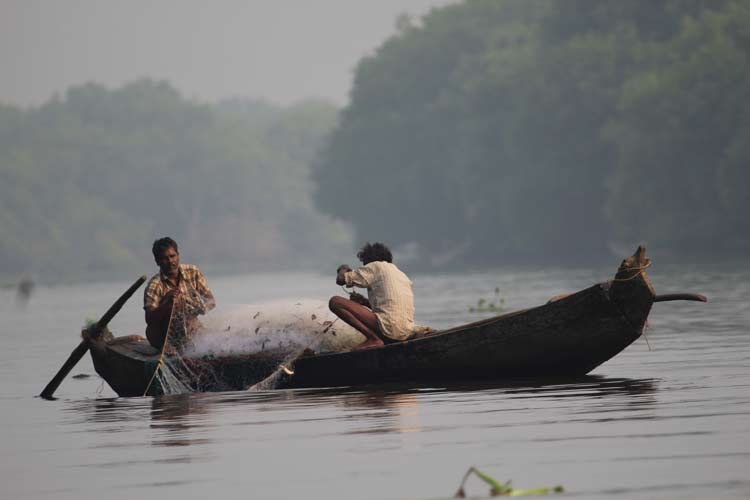
Fishing in Godavari mangrove forest
—
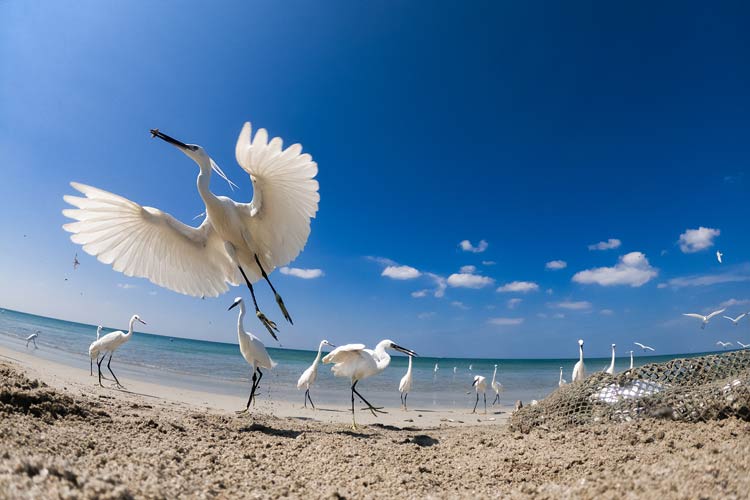
“The Theft of Fish”
—
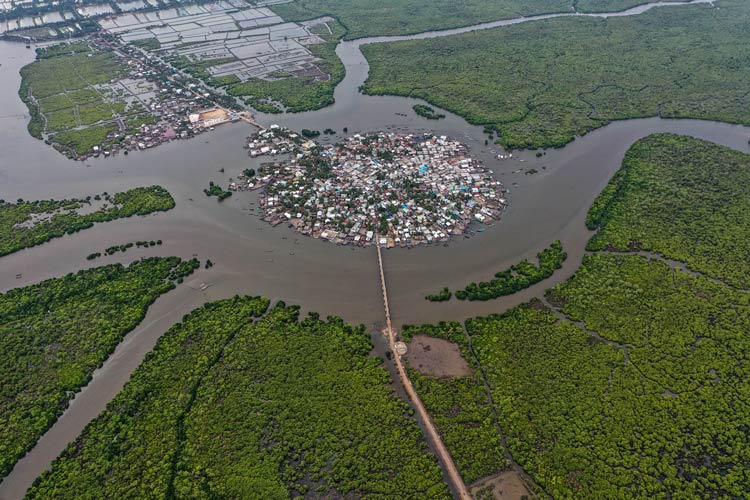
Fishermen village surrounded by mangrove forest, East Godavari District of Andhra Pradesh, India
Climate change poses a danger to mangroves due to rising sea levels, increased temperatures, more intense storms, and shifting rainfall patterns. As a result, these important coastal ecosystems are in jeopardy. As mangroves decline, fish, birds, and other wildlife, along with the people and communities that rely on them, are also impacted. They face the loss of habitat, food, protection, and livelihoods.
To protect mangroves is to help preserve various plant and animal species, support coastal communities and livelihoods, and maintain a natural balance in the environment. The photographs in The Interconnected World of Mangroves collection show the delicate and connected nature of our world, reminding us that taking care of our ecosystems is a responsibility we all share.